Black and white

I already mentioned that it was quite hard to find Emirati in Dubai, but among the few I have seen, most of them were wearing the traditional Emirati clothes.

I really love the men’s outfit… It is quite elegant and flamboyant! I could imagine myself wearing that, but didn’t have the chance to try it on (and didn’t want to visit a store where they sell it, knowing that I would never be able to leave without buying something!). The white dress men are wearing is called a kandora. They cover their head with a white piece of fabric called a ghutra, which is held in place by a black cord, the agal. A similar outfit is worn in other Arabic countries but as I have been told, the color of the dress or of the head cover depends on the origin of the person. For instance, the red and white head cover is typical of rural Saudi Arabia (the Jassir Arafat head wear, as I call it, officially named a keffiyeh) and men of Bahrain, Qatar or Kuwait wear other color combinations as well. Since the UAE are a hub for the Arabic world, you see all kind of traditional clothing there, especially in the luxurious shopping centers.

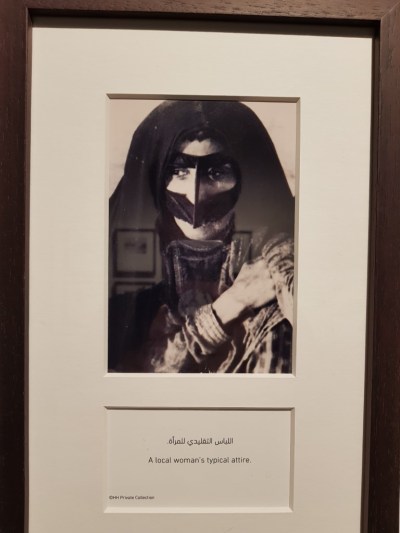
Unlike the diversity found in the men’s dress or headwear colors in the Arab countries, the women’s outfit color is quite universal: black! While the Emirati  men enjoy wearing their heat-friendly white clothes, their wives walk – often in fancy expensive clothes – covered with a black dress called an abaya. Surprisingly, Emirati women wear very rarely a niqab (the black thing completely covering the face that some people wrongly call a burka – burka are similar but worn in Afghanistan or Pakistan.) They mostly wear a normal black head veil to cover their hair. In some more conservative Emirates like Sharjah, where I spent one day, women sometimes wear a face mask covering only the nose, which looks quite weird! It’s a bit like a Venice carnival mask! I heard that these are also worn in neighbor Oman.
20190224_133401 (Mittel)

To be honest, seeing all these couples walking around, with the beautiful white-dressed men and the depressing black-dressed women, made me quite sad and even angry… and although I try to be respectful and understanding towards all religions and traditions, this is something I have a hard time tolerating…

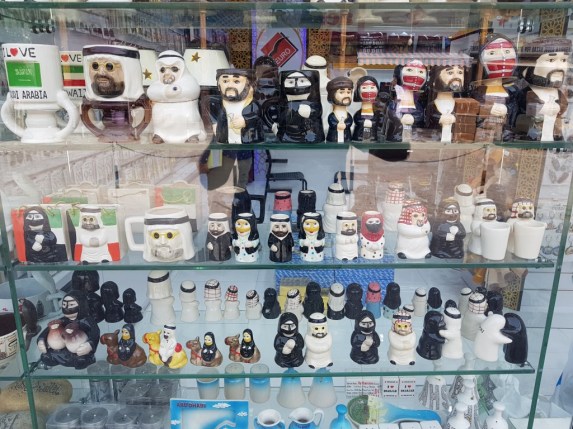
To end on a funnier note (but is it really funny?!), the souvenirs also target the Middle East population… Does anyone of you want a new salt and pepper set?
20190223_132000 (Mittel)

Old Dubai and Deira

Dubai city grew on both sides of the Creek river in what forms nowadays two neighborhoods: Old Dubai and Deira. I spent two half days walking around this area, one on each side of the river.

The destination of the ferry ride from the Marina was Old Dubai. In the touristic part of this area, there is no bridge to go to Deira so the only way to cross the river is to take a traditional boat, called an abra – or as an alternative to take the metro! Taking the boat appeared to be a pure touristic attraction, with many Chinese bus groups waiting to cross… so I avoided it!

Old Dubai is a nice area to stroll around, although it doesn’t look very authentic. It feels like it has been reconstructed recently to have an old-looking touristic attraction…! It reminded me a bit of the Old Town of Shanghai which was destroyed under the Mao regime and rebuilt in the 1980s/90s for tourism. But no matter whether authentic or fake, the neighborhood has a nice vibe. One of the main features of traditional Arabic gulf architecture are the so-called wind towers which were built to cool down the buildings by letting air in.

The center of Old Dubai is a fort – Fort al-Fahidi. It is the oldest building in Dubai (from the end of the 18th century) and has been transformed into a quite informative city museum. That’s where I learned a lot from the UAE history. I was also surprised to read that Dubai got rich through pearl trading! It was quite impressive to see old black and white pictures of the city. Until the 1960s – and the discovery of oil! – it was really a small settlement around the river!

Around these touristic places, there is of course a bazar selling everything a tourist needs (or better said does not need!).

The famous souks are on the other side of the river, in Deira, which I visited another day and reached by metro. There, the markets are a bit more authentic, with a gold bazar and a spice bazar. As usual in Arabic countries, it is hard to walk through a market without being stopped every minute by a merchant. But thanks to my travel experience, I have quite a good technique to get rid off them – basically just saying no and smiling like an idiot! – so they give up quite quickly and try to find another target. The main products they sell are spices and so many weird things I have never seen before!… No idea what it is…! What I was happy to find is oud. The last perfume I bought some years ago mainly contained oud, and I had no idea how it looks like. It is basically wood, and is very expensive!

Come and have a little tour with me on the souks!

Walking around…

…enjoying the Gold souk with its very shiny jewelry… (Middle Eastern bling bling!)

…being amazed by the colorful spice market…

…admiring the precious safran and oud stores…

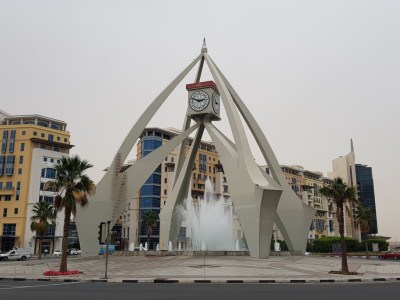
I also made a little detour to see the Deira clocktower, depicted on the city maps… Not really worth the detour but I got the picture 😉

20190223_144939 (Mittel).jpg

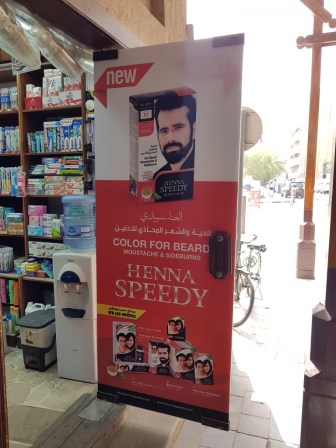
On a funnier note, I also solved a mystery! I was wondering why there is no man with grey beard or moustache hair in Dubai… The best examples are the sheikhs themselves…! Even 100 year old looking men have crow-black beards. One hint: it has nothing to do with their great genetics…! haha!

20190223_132924 (Mittel).jpg